
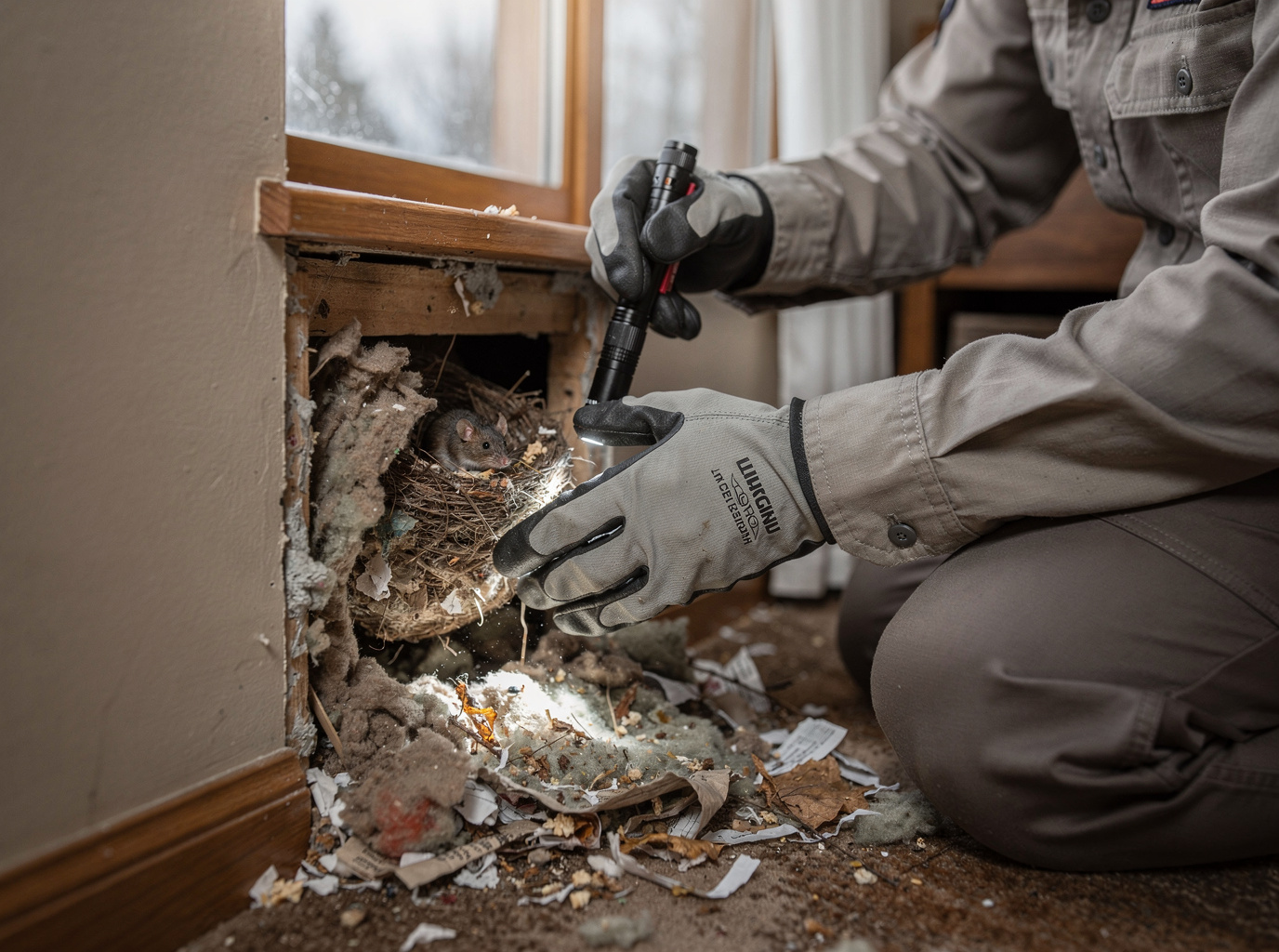
Discovering a mouse nest in your Minnesota home, whether it's in the attic of a classic Victorian in the Summit Hill neighborhood or tucked away in the basement of a newer build in the Linden Hills area, is a clear sign of an active infestation. Mice seek out warm, secluded spots to build their nests, often using shredded paper, insulation, fabrics, and other soft materials they scavenge from your home. These nests are not just unsightly; they're breeding grounds for disease, parasites, and a source of continuous damage to your property. Given Minnesota's cold winters, mice are particularly driven to find indoor shelter, making proactive nest removal and exclusion critical.
Removing a mouse nest isn't just about scooping it out; it requires a thorough understanding of mouse behavior and the potential health risks involved. Mouse droppings and urine associated with nests can carry hantavirus, salmonellosis, and leptospirosis, making direct contact dangerous. Our approach in Minnesota Mouse Guard involves careful removal using proper protective equipment, followed by comprehensive sanitation and disinfection of the affected area. This is especially important in older homes around the Como Park area, where years of potential mouse activity can leave behind significant biohazards in wall voids and attics.
After removing the nest and sanitizing the area, the next crucial step is identifying and sealing off entry points to prevent future infestations. Mice can squeeze through incredibly small openings, sometimes as tiny as a quarter-inch. We meticulously inspect common entry points in Minnesota homes, such as gaps around utility lines, foundation cracks, poorly sealed dryer vents, and even openings around garage doors. For properties near natural areas, like those bordering Minnehaha Park, this includes checking for gaps where mice might enter from nearby wooded areas. Our goal is to make your home as mouse-proof as possible, addressing vulnerabilities specific to the diverse housing stock found across the Minnesota area.
Beyond immediate removal and sealing, we also provide recommendations for ongoing prevention. This includes advising on proper food storage, managing clutter that can provide nesting materials, and addressing landscaping elements that might attract mice close to your home. For instance, homes in areas like Nokomis often have mature gardens that, if not properly maintained, can offer mice easy access. Our comprehensive service ensures that once a mouse nest is gone, the conditions that allowed it to form are also mitigated, offering long-term peace of mind against these persistent pests.
Technician insight
In Minnesota, the thing that catches most people out with mouse nests is how quickly they can proliferate, especially once winter temperatures drop. Homeowners often find a 'small' nest, but after a thorough inspection, we uncover several more, tucked away in wall voids or under insulation in the attic, particularly in older homes around the Highland Park or Longfellow neighborhoods where construction allows for more hidden access points.
Attic Nest in a Linden Hills Home
A homeowner in Linden Hills reported scratching noises in their attic. We found a large mouse nest built into the insulation, along with extensive droppings. We safely removed the nest, vacuumed and disinfected the area, and sealed a small gap where the roofline met the fascia, preventing further entry and restoring peace of mind.
Mouse Nest in House Services We Offer
✓Attic & Wall Void Nest Removal
Specialized service for safely locating and removing mouse nests hidden deep within attics and wall voids, common in older Minnesota homes, followed by thorough disinfection.
✓Basement & Crawl Space Nest Cleanup
Comprehensive removal of mouse nests and associated debris from basements and crawl spaces, frequently found in homes across the Minnesota area, including sanitation to eliminate health risks.
✓Sanitation & Disinfection
Professional cleaning and disinfection of areas where mouse nests were found, neutralizing pathogens from droppings and urine to ensure a healthy living environment.
✓Entry Point Sealing & Exclusion
Identification and sealing of all potential mouse entry points, from foundation cracks to utility gaps, to prevent future infestations after nest removal.
✓Mouse Dropping & Urine Cleanup
Safe and thorough removal of mouse droppings and urine stains, critical for preventing airborne diseases and odors associated with past mouse activity.
✓Odor Elimination Treatment
Application of professional-grade odor neutralizers to eliminate lingering mouse odors after nests and droppings have been removed, restoring freshness to your home.
Mouse Nest in House Cost in Minnesota
| Service | Typical Range | What Affects It |
|---|---|---|
| Basic Nest Removal & Cleanup | $200–$450 | For easily accessible nests with minimal cleanup and disinfection needs. |
| Attic/Wall Void Nest Removal (Complex) | $400–$800+ | For nests in hard-to-reach areas requiring extensive access, cleanup, and odor treatment. |
| Full Property Sanitation & Exclusion | $600–$1,200+ | Includes multiple nest removals, comprehensive disinfection, and sealing of multiple entry points across the property. |
Ranges are typical for Minnesota and confirmed with an exact written quote before any work starts.
How it works
- 1
Thorough Inspection
We start with a detailed inspection of your Minnesota property to pinpoint the exact location of mouse nests, identify signs of activity, and discover potential entry points.
- 2
Safe Nest Removal
Using proper protective equipment, we carefully and completely remove all mouse nests, associated debris, and visible droppings from your home.
- 3
Sanitation & Disinfection
The affected areas are then thoroughly cleaned and disinfected to eliminate pathogens and neutralize odors left behind by the mice.
- 4
Exclusion & Prevention
Finally, we seal off identified entry points and provide recommendations for long-term prevention, ensuring your home remains mouse-free.
Pricing
Upfront quotes provided after a thorough inspection; pricing varies based on nest location, size of infestation, and extent of damage/cleanup required.